
Improving Patient’s Care And Safety
A Necessity For Improving Healthcare Outcomes
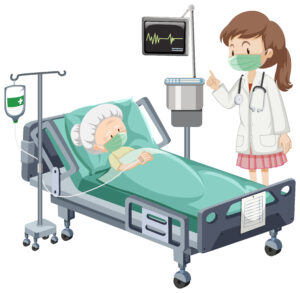
When it comes to healthcare results, the care and safety of patients is paramount. All health-care providers should make it a goal to improve patient care in order to achieve a high level of patient satisfaction. Increased public awareness, rising demand for better care, increased competition, increased health-care regulation, an increase in medical malpractice litigation, and concerns about poor outcomes are all factors contributing to this. The adoption of a system that is “patient oriented” is a basic prerequisite.
Many attempts to improve patient safety and care quality include the development of a safety culture. Building several interventions or tools to promote patient safety culture is a common method. Patient safety culture can be measured to identify areas for improvement and to track changes over time.
Existing health-care issues are caused by both medical and non-medical aspects, necessitating the implementation of a complete system that addresses both.
Non-medical Aspects
All individuals who work in the medical care system must recognize that the patient is the most important person in the system. In any hospital, this one aspect has a huge impact on patient care. The following are some of the challenges that must be addressed in order to improve patient care:
- Accessibility:
All people who need health care services should be able to go to the hospital and be attended to.
- Administration:
Check-in and check-out procedures should be “patient friendly,” with a well-established system of operations that patients like.
- Waiting Time:
This should be reduced and effectively addressed by reviewing patient replies and other data on a regular basis and using this information to make the necessary improvements.
- Information:
Patients should be given clear instructions and information about all procedures, both medical and administrative and also carried along in the treatment plan. Patient counsellors can be involved.
- Communication:
Keeping the patient and family informed about the treatment plan and any delays can help alleviate a lot of frustration and anxiety.
Medical Aspects
This is contingent on the level of medical and technological competence available, as well as the equipment and quality assurance processes in place. The following factors play a role in improving patient care:
- Availability of Trained Personnel:
Providing high-quality care with desirable outcomes necessitates the availability of well-trained healthcare personnel. Major issues include a lack of adequate personnel or inadequate training facilities for the available personnel.
- Providing High-Quality Health Care:
The outcomes of medical and surgical treatments are a major source of concern. Quality assurance systems must be integrated into every phase of patient care.
- Availability of Equipment and Appropriate Medications:
All required equipment must be present and in good working order. This is critical to the medical system’s effectiveness and contributes significantly to better outcomes. For proper care, having access to high-quality affordable drugs is a must.
- Use of Newer Technologies: It’s critical to keep up with newer technologies that increase care quality. Of course, this must be done in light of cutting down cost.
Conclusion
Infrastructure, training, staff competence, and operational system efficiency are all important factors in determining the quality and safety of patients’ care. Patient’s safety and care improvement is a dynamic process that should be in the forefront of medical professionals’ attention. The creation and maintenance of a patient-sensitive system are crucial to attaining this goal. It is critical to focus on quality in all aspects of patient care, medical and non-medical.
References
Improving patient safety by identifying latent failures in successful operations
https://www.sciencedirect.com/science/article/abs/pii/S0039606007001249
Healthcare climate: A framework for measuring and improving patient safety
Predictors and outcomes of patient safety culture in hospitals
https://link.springer.com/article/10.1186/1472-6963-11-45
How can we improve patient care? https://www.ncbi.nlm.nih.gov/pmc/articles/PMC1705904/
About the Author
Dr Cynthia Chisom Edeh
Cynthia Chisom Edeh is a Medical Doctor, Writer, Content Developer and Health Awareness Creator. She is also a Girl Child Advocate and Health Volunteer.
http://linkedin.com/in/cynthia-chisom-edeh-a151b9121
https://instagram.com/nizu_p?r=nametag
https://mobile.twitter.com/nizu_p